


Leading with Purpose, Performing with Impact
In an era defined by complexity and constant change, Paul O’Donovan Rossa believes great leadership requires more than achievement—it requires self-awareness, courage, adaptability, and genuine human connection.
Can you introduce Platinum Coaching and share the inspiration behind its establishment?
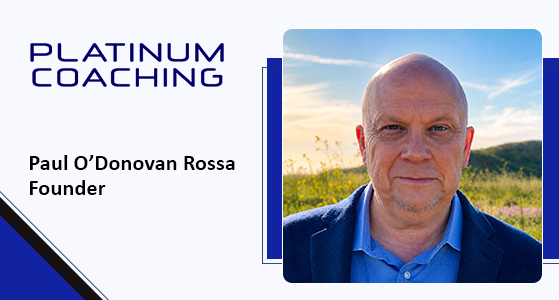
Platinum Coaching was established from a deep belief that every accomplished leader deserves a trusted, impartial partner genuinely invested in their success. Founded by executive coach Paul O’Donovan Rossa, the practice draws on his extensive experience across business, leadership, and high-performance sport, translating both achievement and adversity into a distinctive coaching philosophy.
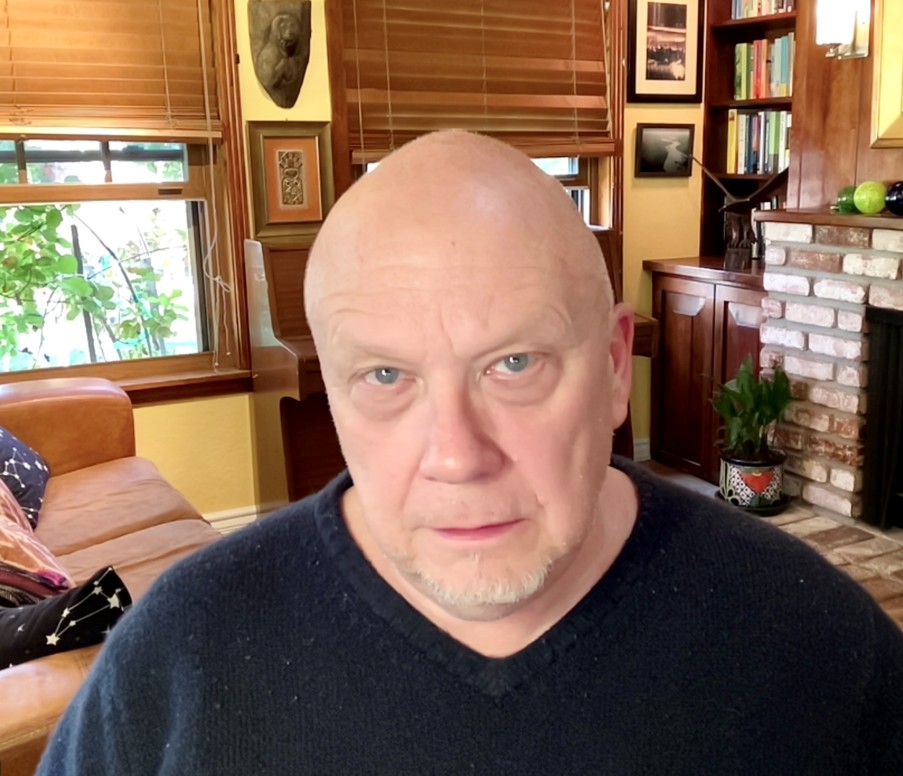
His own experiences, including executive leadership, sporting success, burnout, and the challenges of navigating organizational dynamics have shaped a commitment to helping others grow with greater clarity, autonomy, and resilience. Rather than offering generic advice, Platinum Coaching provides highly personalized, context-specific guidance designed around each leader’s circumstances, ambitions, and challenges. The approach is grounded in truth, neutrality, collaboration, inclusion, and a win-win-win mindset, ensuring that leaders, teams, and organizations can progress together. Today, Paul works with C-suite executives, senior leaders, and teams across more than 30 countries, helping clients strengthen leadership capability, navigate complexity, and achieve sustainable personal and professional growth.
What is your mission, and how does Platinum Coaching help executives, business leaders, and organizations achieve sustainable success?
Platinum Coaching’s mission is to help executives, business leaders, and teams break through limitations, understand unseen dynamics, and develop the capacity to adapt effectively in changing environments. The approach recognizes that sustainable success cannot be achieved through logic and strategy alone. Meaningful transformation requires alignment across an individual’s vision, values, mindset, self-awareness, experience, and actions.
Platinum Coaching provides highly personalized support to help leaders identify the internal and external factors that may be limiting their progress and discover a path forward that reflects their unique circumstances. Rather than relying on a fixed formula, the coaching process combines deep listening, thoughtful inquiry, psychology, self-reflection, and constructive challenge. This enables clients to better understand themselves, their relationships, and the organizational systems in which they operate. By turning insight into purposeful action and continuously learning from experience, leaders can build greater adaptability and resilience. The ultimate goal is not simply to achieve a specific outcome, but to develop the awareness and capability required to sustain meaningful growth and navigate future challenges with greater confidence and effectiveness.
How do you help leaders navigate complex business challenges, organizational change, and high-stakes decision-making?
Platinum Coaching helps leaders navigate complex business challenges by creating a neutral space where they can examine situations beyond conventional cause-and-effect thinking. Rather than focusing immediately on finding a “solution,” the coaching process encourages leaders to explore the wider factors at play, challenge assumptions, recognize blind spots, and develop clarity before taking action. Courage is also central to this work, particularly when difficult decisions have been delayed and are affecting organizational alignment, team energy, or future opportunities.
A key strength of the coaching approach is constructive challenge. Through ongoing dialogue, sponsor conversations, individual team coaching, and 360-degree feedback, patterns in commitment, behaviour, avoidance, or cognitive bias can be identified and explored safely. The coach does not provide predetermined answers; instead, coaching becomes a joint investigation that enables leaders to arrive at their own executional clarity. Drawing on experience with complex systems, Platinum Coaching also provides exploratory advisory insight around self-management under pressure and the broader factors influencing leadership decisions. This combination of inquiry, challenge, reflection, and perspective helps leaders make more considered decisions and respond effectively to change.
What are some of the most common leadership challenges your clients face, and how do you help them overcome these obstacles?
Platinum Coaching helps leaders address challenges that often remain hidden behind professional success, including unclear thinking, difficulty exercising authority, relationship dynamics, emotional intelligence, and the ability to build alignment while maintaining accountability. A central part of the work is encouraging leaders to move beyond familiar assumptions and engage in deeper self-examination, recognizing that past success does not necessarily provide the answers required for future challenges.
The coaching process explores how leaders communicate expectations, build trust, and engage colleagues as professional partners rather than simply viewing people as resources to be directed. Leaders are encouraged to balance authority with reciprocity, ensuring that accountability strengthens relationships rather than creating resistance or resentment. Platinum Coaching also challenges assumptions embedded in words such as “should,” “must,” or “ought,” helping leaders examine the thinking behind their actions. Through reflection, constructive challenge, and a win-win-win mindset, leaders can develop greater clarity, courage, foresight, and relational effectiveness. The goal is to create leadership that inspires while providing mature direction, enabling teams to respond with commitment and alignment and helping organizations achieve sustainable collective success.
Could you share a success story or case study that highlights the measurable impact of your coaching on an individual or organization?
A notable example of Platinum Coaching’s impact involved the CEO of a 1,200-person professional services organization. Initially, he was a humble and highly committed servant leader whose self-effacing approach made him reluctant to put himself forward for the CEO position. Through coaching, he developed greater confidence and learned to communicate his vision and strategic ideas with greater clarity and assertiveness. He later shared that he would not have applied for the role without the coaching, and ultimately became the preferred candidate.
As CEO, he led significant organizational modernization, strengthening the firm’s approach to technology while deepening relationships between the executive team, practice areas, and industry-focused groups. The organization developed a stronger relational culture, supported by coaching that encouraged collaboration across previously isolated teams. Mobile teams emerged, creating opportunities for innovation and greater synergy between practice areas, while the firm’s renewed approach contributed to recognition through innovation awards.
Importantly, the transformation created conditions that extended beyond his tenure. The subsequent CEO was able to build on the modernization, alignment, and stronger organizational relationships already established, ultimately achieving substantial profitability. The case demonstrates how leadership coaching can create lasting organizational value beyond the individual being coached.
How do you measure the success and long-term impact of your coaching engagements for both individuals and organizations?
Platinum Coaching measures success by looking beyond immediate outcomes and focusing first on the quality, depth, and engagement of the coaching process. Because organizational change cannot always be predicted or attributed to a single intervention, the priority is ensuring that the leader, coach, and sponsoring organization make the fullest possible use of the engagement while it is underway. Regular, candid feedback from sponsors and the wider organization helps assess whether the coaching is creating meaningful movement and whether the original objectives remain relevant.
Longer-term impact is evaluated through both individual and organizational indicators, including 360-degree feedback, retention, decision quality, leadership effectiveness, team relationships, and the organization’s ability to adapt to changes in its people and circumstances. These measures are interpreted within the broader organizational context rather than viewed in isolation. Platinum Coaching also considers whether the system itself has changed sufficiently to support and embed new leadership behaviours. The aim is to establish clear developmental goals from the outset and integrate coaching into the organization’s wider environment. While the timing and scale of results cannot be guaranteed, sustained engagement, observable behavioural change, stronger relationships, and improved organizational conditions provide meaningful evidence of progress and lasting impact.
What emerging trends do you believe will shape the future of executive coaching and leadership development over the next five years?
Over the next five years, executive coaching will increasingly focus on creating sustainable value, adaptability, and resilience rather than delivering quick solutions. Coaching will become more systemic, recognizing that leadership challenges are shaped by organizational culture, operating models, relationships, and changing business environments. Platinum Coaching’s emphasis on helping leaders gain clarity, self-understanding, and stronger strategic and human awareness reflects this direction.
AI will also play a growing role in leadership development, providing powerful opportunities for analysis, learning, and insight. However, human creativity, critical thinking, discernment, and the productive struggle involved in genuine personal growth will remain essential. Effective coaching will therefore focus on where human judgment adds value beyond generalized or automated responses.
The meaning of sustainability is also likely to expand beyond financial performance toward the long-term health of people, organizations, cultures, and wider systems. Leaders will need to understand their impact within these interconnected environments and develop the capacity to continually adapt. Ultimately, the future of coaching will be about deeper questioning, meaningful relationships, and helping leaders translate insight into practical action that creates lasting organizational impact.
What advice would you give to aspiring leaders and executives who want to maximize their leadership potential and drive organizational growth?
Aspiring leaders should recognize that leadership development involves two interconnected dimensions: achievement and humanness. Strong execution, strategic thinking, efficiency, and decisive action are essential for organizational growth, but lasting leadership impact also depends on self-awareness, emotional intelligence, energy management, relationships, and the ability to understand one’s influence on others and the wider organization.
Leaders should therefore seek feedback not only on their performance, but also on their impact and influence. Honest feedback from trusted colleagues, teams, mentors, or coaches can reveal blind spots that may otherwise remain unseen. It is equally important to develop the courage to confront difficult truths, examine personal assumptions, and recognize that one’s own perspective is only part of the wider organizational story.
Rather than treating personal development as something that follows professional achievement, leaders should develop both dimensions simultaneously. Coaching can help individuals move beyond simply refining their leadership identity toward becoming more self-aware, authentic, and effective. By understanding human connection, motivation, systemic dynamics, and personal responsibility, leaders can build stronger relationships while making better decisions. Ultimately, the most effective leadership emerges when achievement and humanness reinforce each other, enabling individuals to lead with greater clarity, credibility, and lasting impact.
“Empowering Leaders to Turn Self-Awareness into Sustainable Success”
“Where Human Potential, Strategic Thinking, and Leadership Excellence Converge”

Company Name : PLATINUM COACHING
Website : https://platinum-coaching.com/
Management Team
Paul O’Donovan Rossa | Executive Coach

