


Shaping the Future of Community-Based Heart Care
In this interview, the leadership at Tri-City Cardiology discusses how a clear clinical vision, operational discipline, and innovation-driven care models are shaping the future of community-based cardiovascular excellence.
What inspired the founders to start Tri-City Cardiology?
Tri-City Cardiology was founded in 1979 with a clear and patient-centered purpose: to make high-quality cardiovascular care more accessible within the local community. The founders recognized that Maricopa County was experiencing rapid population growth, particularly among retirees who required consistent, specialized heart care. Many of these patients faced the burden of traveling long distances or navigating large hospital systems to receive advanced cardiac services. As Dr. Jaskamal Kahlon has shared, the vision was to bring comprehensive cardiology care closer to where patients live, in settings that felt safer, more efficient, and more personal. Outpatient environments offered distinct advantages, including reduced infection risks, predictable scheduling, streamlined visits, and faster recovery and discharge times. This understanding shaped a physician-led model focused on personalized attention, clinical excellence, and the thoughtful use of advanced technology. By keeping care local and patient-focused, Tri-City Cardiology was created to deliver sophisticated heart care without compromising comfort, convenience, or trust.

Could you share the founding mission and vision and how those have evolved over the years?
Founded in 1979, Tri-City Cardiology began with a clear and enduring mission: to help cardiac patients live longer, healthier lives by delivering compassionate, high-quality cardiovascular care close to home. From the outset, the founders envisioned a community-based practice that could offer the full spectrum of heart care, ranging from prevention and early diagnosis to advanced intervention and long-term management, without requiring patients to rely solely on large hospital systems. This physician-led model placed strong emphasis on patient-centered care, clinical excellence, and highly personalized treatment plans tailored to individual needs. Over the decades, that core mission has remained constant, while the vision has expanded alongside advances in medical science and technology. Tri-City Cardiology has continually evolved by integrating innovative diagnostics, minimally invasive procedures, and evidence-based therapies, all while preserving its commitment to accessibility and trust. Today, the organization reflects a balance of deep-rooted values and forward-looking care, ensuring patients receive comprehensive, modern cardiology services within a supportive, community-focused environment.
How do you balance patient-centered care with the operational and technological demands of a high-tech cardiology practice?
- Patient Experience First
- Keep care personal by using technology to support, not replace, human interaction.
- Leverage EMRs and digital tools to create individualized care plans.
- Use online scheduling, reminders, and telehealth to improve convenience while maintaining clear, compassionate communication.
- Technology Aligned With Clinical Outcomes
- Invest in advanced imaging, remote monitoring, and AI-driven diagnostics that directly enhance safety and quality of care.
- Avoid unnecessary or disconnected systems that add complexity for clinicians or patients.
- Operational Efficiency Without Sacrificing Care
- Automate administrative functions such as billing, scheduling, and reporting to free clinicians’ time for patient interaction.
- Apply data analytics to reduce wait times, optimize resources, and anticipate patient needs.
- Continuous Training and Culture
- Provide ongoing staff education so teams understand how technology enhances patient outcomes.
- Educate patients on new tools, ensuring comfort and confidence with digital health solutions.
- Strong Governance and Oversight
- Use clinical-technology committees to assess tools based on patient benefit, compliance, and long-term value.
Could you highlight a few flagship services or procedures that distinguish the institution?
- Structural Heart Interventions
- TAVR (Transcatheter Aortic Valve Replacement): A minimally invasive alternative to open-heart surgery for patients with severe aortic stenosis, restoring healthy blood flow and improving cardiac function with faster recovery times.
- MitraClip Therapy: A catheter-based procedure that treats degenerative mitral regurgitation by reducing valve leakage, leading to improved symptoms and quality of life.
- Stroke Prevention Therapies
- WATCHMAN Device Implantation: A one-time, minimally invasive implant that closes the left atrial appendage in patients with atrial fibrillation, significantly lowering stroke risk and reducing reliance on long-term blood thinners.
- Advanced Electrophysiology Services
- Comprehensive Arrhythmia Care: Includes pacemaker and defibrillator implantation, electrical cardioversion, and radiofrequency ablation to manage complex heart rhythm disorders.
- Interventional Cardiology
- Coronary Angioplasty and Stenting: Minimally invasive procedures designed to open blocked arteries and restore optimal blood flow to the heart.
- ASD/PFO Closure: Catheter-based correction of congenital heart defects to reduce complications and improve overall cardiac health.
- Vein and Vascular Care
- Advanced Endovascular Treatments: Specialized care for venous insufficiency and peripheral artery disease using minimally invasive vascular techniques.
What technologies or infrastructure investments have been critical in maintaining high-quality care at Tri-City?
- Artificial Intelligence–Driven Operations
- Tri-City Cardiology has made significant investments in AI-powered administrative infrastructure through its partnership with Basata.
- AI agents streamline clinical fax workflows, while voice AI supports patient communications.
- A unified AI platform manages scheduling, referrals, and administrative tasks, reducing staff burden, improving efficiency, and enhancing the overall patient experience.
- Advanced Clinical Technology
- State-of-the-art echocardiography, cardiac CT, and nuclear imaging systems support precise diagnosis and informed treatment planning.
- Fully equipped electrophysiology labs enable advanced arrhythmia care, including complex ablations and device implantations.
- Outpatient and Ambulatory Infrastructure
- Purpose-built ambulatory surgery centers support minimally invasive procedures such as TAVR, WATCHMAN, and MitraClip, improving safety and convenience.
- Microhospital development adds overnight cardiac care capabilities in a patient-friendly setting.
- Digital Health and Connectivity
- Secure telehealth platforms and remote monitoring tools support ongoing management of chronic cardiac conditions.
- Integrated EMR systems ensure seamless data sharing and continuity of care across all locations.
- Strategic Partnerships
- Collaborations with local health systems expand access to specialty care, research, and advanced IT infrastructure for future growth.
What are the biggest challenges Tri-City Cardiology faces today, how do you overcome?
Tri-City Cardiology faces several challenges common to modern cardiovascular practices, including staffing shortages and clinician burnout, rising operational costs alongside declining reimbursement rates, and increasingly complex regulatory and billing requirements. In addition, patient non-adherence to treatment plans and growing expectations for digital-first, on-demand care continues to test traditional care models.
To address workforce challenges, the organization prioritizes flexible scheduling, team support, and wellness initiatives that promote long-term retention and morale. Operational and financial pressures are managed through AI-driven administrative automation, which reduces manual workloads, and by investing in billing optimization and compliance technologies to improve accuracy and efficiency. Patient engagement challenges are met through expanded education, remote monitoring, and structured telehealth follow-ups that encourage adherence and continuity of care. At the same time, digital tools such as patient portals and telemedicine platforms enhance accessibility and convenience. Together, these strategies allow Tri-City Cardiology to adapt to change while maintaining high standards of quality, efficiency, and patient-centered care.

What kind of legacy do you want to build as a leader at Tri-City Cardiology?
As a leader at Tri-City Cardiology, I aspire to build a legacy grounded in three core principles: uncompromising patient care, purposeful innovation, and long-term sustainability. First and foremost, I want Tri-City to be recognized for delivering world-class cardiovascular care that remains deeply personal, accessible, and rooted in trust. Embracing advanced technology and data-driven tools is essential, not for their own sake, but to improve clinical outcomes, efficiency, and the overall patient experience. Equally important is cultivating a culture where physicians, caregivers, and staff feel supported, inspired, and empowered to do their best work. By fostering strong partnerships, investing in people, and designing facilities that redefine the outpatient cardiac experience, we can set a new standard for community-based heart care. Ultimately, my goal is to help build a future-ready institution that balances compassion with progress and continues to serve patients and families with excellence for generations to come.
“Where Compassionate Care Meets Cardiovascular Innovation”
“Building a Healthier Heart for Every Generation”

Company Name : Tri-City Cardiology
Website : https://tricitycardiology.com/
Management Team
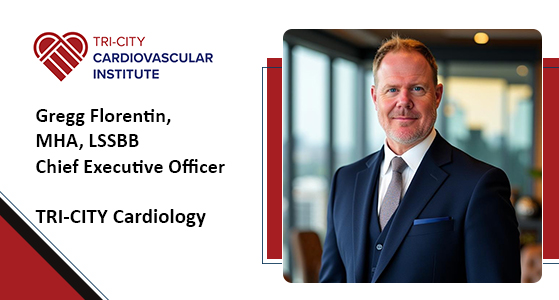
Gregg Florentin, MHA, LSSBB
| Chief Executive Officer

