

Reliability Was Always the Point: Why AI in Mission-Critical Systems Must Earn Its Place
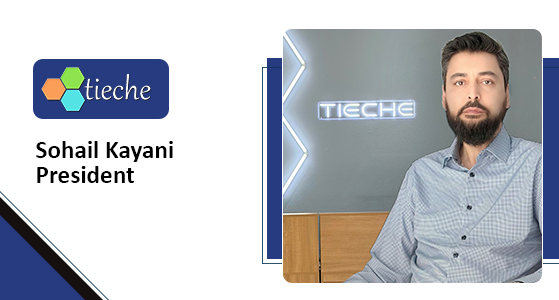
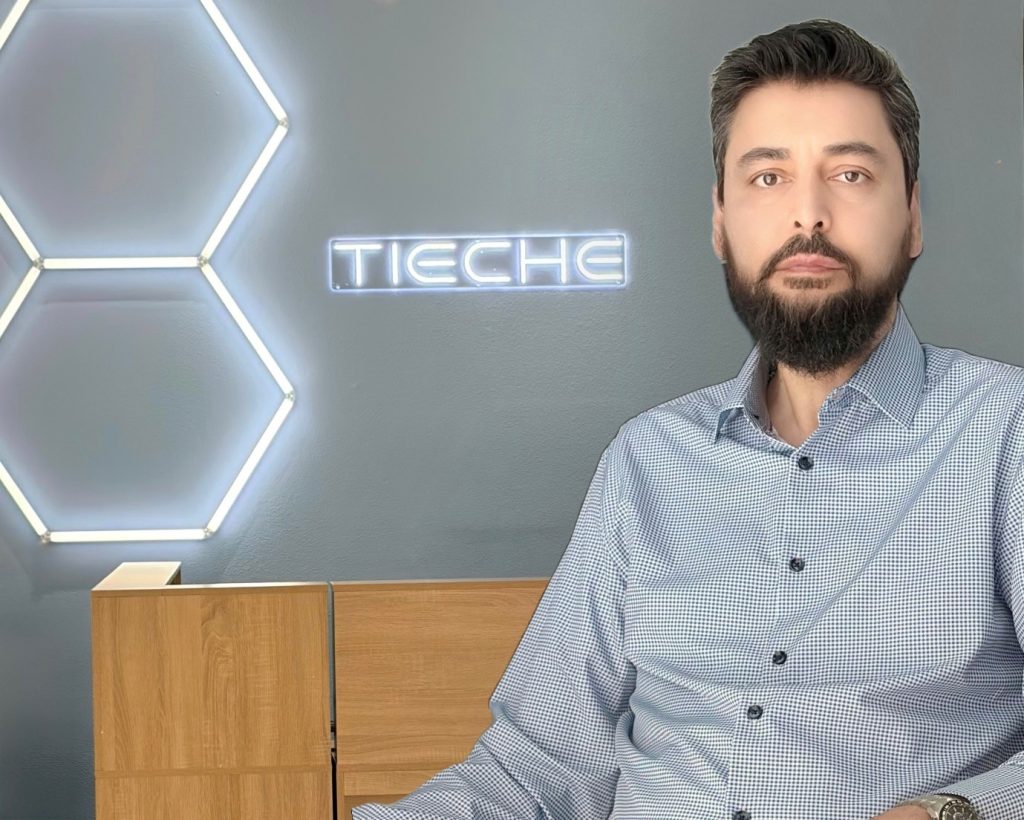
By Sohail Kayani, President, TIECHE Engineered Systems
AI Was Already There
Artificial Intelligence did not arrive suddenly in industrial automation. Long before it became a headline or a selling point, its foundational algorithms were already embedded in control systems, analytics engines, and automation platforms. What changed was not the intelligence itself, but the environment in which it operated.
Processing power increased. Storage became cheaper and more accessible. Data volumes grew to a scale that simply did not exist before. Together, these shifts made it possible to analyze patterns that had previously gone unnoticed. Large Language Models added another layer, allowing information to be processed and interpreted faster than ever.
That convergence pushed many industries toward AI adoption at speed. But speed, particularly in mission-critical environments, is rarely a virtue on its own.
Why Mission-Critical Environments Are Different
In sectors such as data centers and telecommunications, technology decisions carry consequences that often do not reveal themselves immediately. They surface later, frequently under pressure, when systems are already strained. That is why AI cannot be treated as a trend in these environments. It has to earn its place.
Mission-critical facilities operate under a different set of rules than most commercial buildings. The risks are tangible. A loss of cooling at a telecom switching facility can disconnect large populations and interfere with emergency services like 911. In a data center, even a brief outage can translate into millions of dollars in losses within minutes.
Equipment damage, regulatory penalties, contractual exposure, and reputational harm tend to follow. Because of this, reliability is not something to optimize later. It is the starting point.
The Limits of Redundancy
For years, redundancy was viewed as the primary strategy for reliability. Add another system. Add another backup. Add another layer. Over time, it became clear that redundancy alone does not prevent failure. In some cases, it introduces new vulnerabilities, especially when systems are not fully integrated or deeply understood.
Automation became essential not because it was innovative, but because it was necessary. Systems needed to detect early warning signs, respond decisively, and coordinate across multiple layers of infrastructure. That foundation existed long before AI became fashionable.
When Everything Became “AI”
What changed more recently was the pressure to label nearly everything as AI.
Over the last several years, many property owners and facility managers felt compelled to introduce AI into their operations. Some approached it thoughtfully. Others moved quickly, without clearly defining what success would look like. In those cases, results were mixed. In a few instances, performance actually declined after AI was introduced.
The issue was rarely the technology itself. More often, it was the absence of alignment. AI initiatives were launched without clear, measurable objectives. Business teams and technical teams were not always speaking the same language. Expectations were set without accounting for how mission-critical facilities actually operate.
AI was expected to deliver immediate insight in environments deliberately designed to minimize variation.
That contradiction matters.
Why TIECHE Chose a Narrower Focus
TIECHE Engineered Systems was founded nearly fifteen years ago in response to gaps like these. At the time, mission-critical facilities were expanding rapidly, yet automation providers continued to apply generalized solutions across industries.
Approaches designed for office buildings or light industrial sites were being extended into data centers and telecom facilities, with predictable results.
We decided early on to do something different. Not broader. Narrower.
Mission-critical automation requires a different mindset. Internally, we often describe the work as closer to surgery than general practice. In these environments, precision is not optional. There is no room for trial-and-error thinking. Mistakes do not scale linearly they compound.
Why Commissioning Could Not Be a Phase
That perspective shaped how we design systems, how we commission them, and how we remain involved long after facilities are operational.
One of the first conclusions we reached was that commissioning could not be treated as a discrete phase. Traditional commissioning assumes a stable handoff: design, build, test, deliver. Mission-critical facilities do not behave that way.
Loads change. Equipment ages. Operational priorities shift. Systems drift.
Continuous commissioning was not introduced as a feature. It emerged as a necessity.
Systems must be evaluated against their design intent over time. Deviations must be identified early, before they turn into risks. Adjustments must be deliberate and controlled, not reactive. This stability is essential for any meaningful application of AI.
AI Depends on Strong Foundations
This leads to a point that is often misunderstood: AI does not replace strong automation fundamentals. It amplifies them.
AI depends entirely on the data it receives from the Building Automation System. If that data is unreliable, incomplete, or inconsistent, the outcome will be the same. There is no workaround.
Mission-critical facilities also present another challenge. These environments are designed for exceptionally high uptime 99.9% or higher. As a result, the kinds of data variation AI models typically learn from are intentionally limited. When systems are designed correctly, failures are rare. That is the goal.
Because of this, AI models require time, patience, and realistic expectations.
Defining Success Before Deployment
This is why we insist on defining quantifiable goals before AI is deployed not after. Without clear metrics, there is no reliable way to determine whether an initiative has delivered value or simply consumed resources.
At TIECHE, AI is not treated as a blanket solution. It is treated as a precision instrument. The objective is optimized reliability, not novelty.
From Commissioning to Digital Twins
That philosophy is reflected in platforms such as Cx.AI and Facility Factor.
Cx.AI focuses on commissioning and testing areas that are traditionally complex, time-intensive, and prone to human error. By automating portions of the process and simplifying interaction through natural language scripting and object recognition, testing becomes more consistent without lowering standards.
Facility Factor addresses a broader operational challenge. Facilities generate enormous volumes of data, yet that information is often fragmented. Drawings reside in one system. Equipment data in another. Maintenance records elsewhere.
Facility Factor brings these elements together through a digital-twin-based approach, allowing facilities to be understood as unified systems rather than disconnected components.

Why Transparency Matters
Transparency is central to this work. In mission-critical environments, AI cannot operate as a black box. Decisions must be explainable. Operators need to understand why a recommendation is made, not just what it is.
Explainable AI is not optional here. It is foundational to trust.
Innovation Without Disruption
Innovation must also respect reality. Many mission-critical facilities operate with legacy infrastructure that still represents significant investment. Replacing everything is rarely practical and often unnecessary.
Our performance-based retrofit and commissioning approach begins with understanding how a facility actually performs today. That baseline is compared against original design intent. Gaps become visible. Improvements are targeted. Equipment life is extended. Reliability improves. Capital expenditure remains controlled.
This is not about doing less. It is about doing what makes sense.
Leadership in High-Stakes Environments
Leadership in this space carries its own responsibility. Mission-critical work demands attention to detail and accountability at every level. At TIECHE, culture is not built around slogans. It is built around expectations.
Problem-solving comes first. Precision matters. Responsible innovation is non-negotiable.
That culture has allowed us to grow without losing focus and to attract people who understand that restraint can be as important as ambition.
Looking Ahead, Carefully
Looking forward, the goal is not autonomy for its own sake. It is to move toward autonomous facility management in a way that strengthens resilience rather than undermines it facilities that understand their own performance, manage maintenance intelligently, and reduce waste without sacrificing reliability.
In an industry that often celebrates speed, mission-critical environments demand something else entirely.
They demand judgment.
AI belongs in these facilities but only when it is applied with discipline, patience, and respect for the systems it supports.
In the end, reliability was always the point.
Why Transparency Matters
Transparency is central to this work. In mission-critical environments, AI cannot operate as a black box. Decisions must be explainable. Operators need to understand why a recommendation is made, not just what it is.
Explainable AI is not optional here. It is foundational to trust.
Innovation Without Disruption
Innovation must also respect reality. Many mission-critical facilities operate with legacy infrastructure that still represents significant investment. Replacing everything is rarely practical and often unnecessary.
Our performance-based retrofit and commissioning approach begins with understanding how a facility actually performs today. That baseline is compared against original design intent. Gaps become visible. Improvements are targeted. Equipment life is extended. Reliability improves. Capital expenditure remains controlled.
This is not about doing less. It is about doing what makes sense.
Leadership in High-Stakes Environments
Leadership in this space carries its own responsibility. Mission-critical work demands attention to detail and accountability at every level. At TIECHE, culture is not built around slogans. It is built around expectations.
Problem-solving comes first. Precision matters. Responsible innovation is non-negotiable.
That culture has allowed us to grow without losing focus and to attract people who understand that restraint can be as important as ambition.
Looking Ahead, Carefully
Looking forward, the goal is not autonomy for its own sake. It is to move toward autonomous facility management in a way that strengthens resilience rather than undermines it facilities that understand their own performance, manage maintenance intelligently, and reduce waste without sacrificing reliability.
In an industry that often celebrates speed, mission-critical environments demand something else entirely.
They demand judgment.
AI belongs in these facilities but only when it is applied with discipline, patience, and respect for the systems it supports.
In the end, reliability was always the point.