


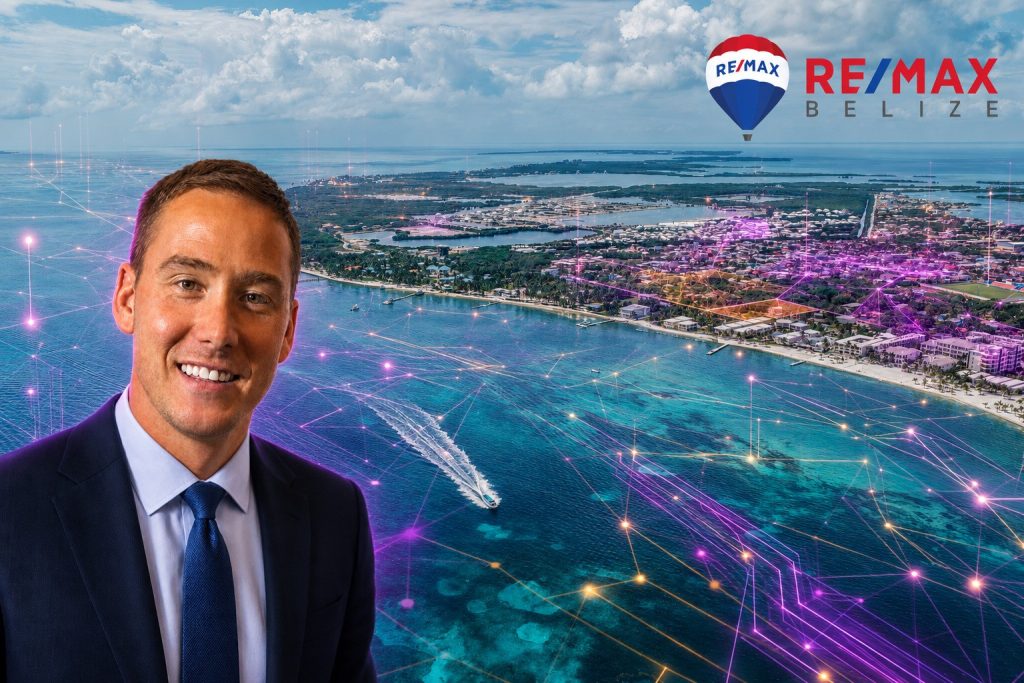
Buying property in another country is not the same as ordering something online. You cannot inspect every detail from a laptop, the consequences are considerably greater than choosing the wrong pair of shoes, and the transaction rarely moves from enquiry to closing in one tidy conversation.
For Will Mitchell and RE/MAX Belize, that is where technology becomes useful. Its job is not simply to make sales faster. It is to reduce the uncertainty of distance and help buyers understand what they are considering before making a decision.
Mitchell has spent nearly two decades working in Belize and now oversees 13 offices and more than 100 agents. Some buyers want a second home or a place to retire. Others are assessing rental demand, development opportunities or the long-term prospects of owning in Belize.
Connecting them with the right information and local expertise requires more than an attractive website. RE/MAX Belize uses video, digital education and customer relationship management to give buyers context early and preserve it as the relationship develops.
Education Before Conversion
Many real estate websites have one immediate objective: capture the visitor’s contact information. That may produce more enquiries, but not necessarily better-informed buyers.
Someone considering Belize may still be learning whether foreigners can own property outright, how San Pedro differs from Placencia or what to ask before making an offer. Treating that person as though they are already at the bottom of a sales funnel is a good way to lose their trust before the relationship begins.
Mitchell’s approach starts with education. Through videos, market commentary and WillMitchellRealEstate.com, buyers can learn about the country’s regions, its ownership system and the practical differences between buying for personal use and buying as an investment before speaking with an agent.
This does not replace a conversation. It makes the conversation worth having. The agent can focus on the buyer’s goals, concerns and suitability instead of spending the first hour correcting assumptions gathered from search results and social media.
RE/MAX Belize’s combined audience of more than 132,000 followers and subscribers also reveals what international buyers are actually asking. Comments, messages and recurring confusion show where another explanation is needed. The audience is not just a marketing asset. It is an ongoing source of market intelligence.
Video Makes Distance Less Abstract
Photography can show what a property looks like. Video is much better at showing how it fits into the world around it.
For an international buyer, the important questions often begin outside the listing. What is the road like? What surrounds the property? How close are services or the water? Does the area feel established, remote or still in the early stages of development?
A carefully framed photograph can answer almost none of that. Video can show the approach, the surrounding community and the relationship between locations. A home that looks isolated in photographs may be minutes from an active town. Another may be beautiful but require more planning than the images suggest.
That context helps buyers decide what deserves further investigation before booking a flight. Video also introduces the people behind the business, which matters when someone may work with an agent for months before meeting in person.
The goal is not to make every property appear perfect. Useful video should help buyers rule out the wrong opportunities as confidently as they identify the right ones. Preventing an unsuitable viewing can be as valuable as generating a new one, especially when the viewing requires an international flight.
CRM as Institutional Memory
Customer relationship management becomes much more important when a business operates through 13 offices rather than from one room.
A buyer may first discover Belize through a video, ask a broad question online and return several months later with an interest in a particular region. The agent best equipped to help at that point may not be the person who received the original enquiry.
A CRM preserves the history behind the relationship: locations under consideration, intended use, timeline, previous conversations and unresolved questions. The enquiry can then reach an agent with the right local knowledge without making the buyer explain the same story again.
Belize may be small, but its property markets are not interchangeable. An agent in San Pedro understands island ownership. An agent in Placencia, Hopkins, Cayo or another mainland market brings different local knowledge. Technology lets those specialists enter the conversation with context.
It does not replace local judgment. Its role is to put the right information in front of the right person at the point when that judgment becomes useful.
When Content and CRM Talk to Each Other
Content and customer data are often managed separately. They become far more valuable when they operate as a feedback loop.
If agents keep encountering the same misconception, that subject should probably become a video or article. If one piece of content produces unusually thoughtful enquiries, there may be an appetite for a deeper explanation. If buyers repeatedly hesitate at the same stage, the company can ask whether an important question is being answered too late.
This turns content into more than promotion. It becomes part of how the company listens and improves the buying experience. It also helps a national network stay consistent. Agents bring their own experience and regional knowledge, but the basic explanations of ownership, due diligence and the buying process should not change with the office answering the enquiry.
Technology Should Improve Judgment
Real estate technology is often judged by how much it can automate. In cross-border real estate, the better question is whether it helps people make better decisions.
Video supplies context photographs leave out. Digital education answers questions before a buyer commits time or money. A CRM preserves continuity and spares people from repeating themselves. None can decide whether Belize, a particular region or a specific property is right for someone.
That still requires conversation, investigation, experienced local advice and the willingness to say when an opportunity does not suit the buyer.
The strongest technology strategy is not the one that removes people from the process. It is the one that makes the human part of the process better informed. In a cross-border transaction, trust is not created by pretending distance no longer exists. It is created by using technology to make that distance less uncertain, one useful answer at a time.

