



Building Financial Infrastructure for the Workforce the System Forgot
Clinical trials sit at the heart of medical progress, yet the systems supporting them have not always evolved at the same pace as the science they enable.
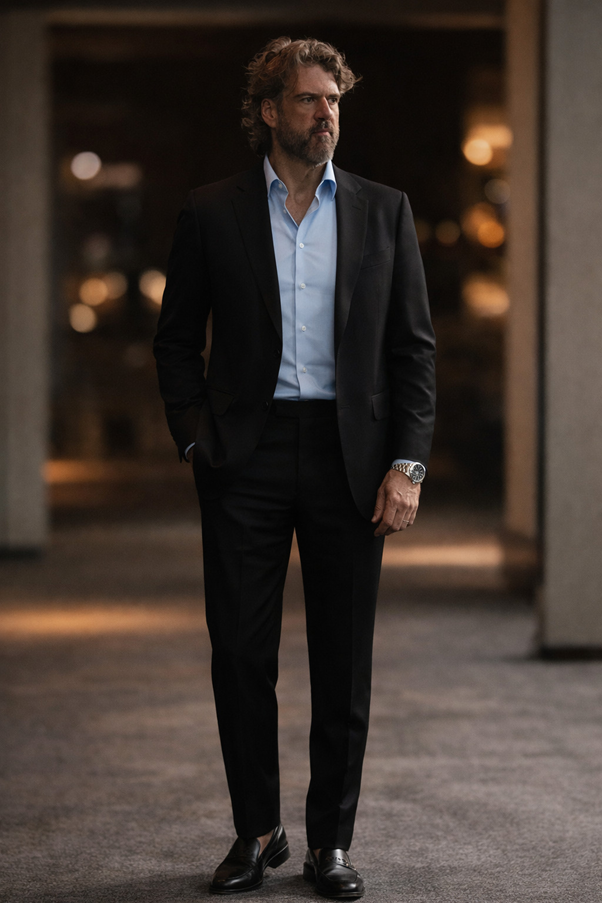
When speaking with Scott Weidley, President and CEO of ClinCapture, Inc., the conversation quickly turns to a problem he has watched unfold for years across the clinical research industry.
Weidley explains that investigators, sponsors, and study coordinators often spend more time navigating disconnected software systems than focusing on the science itself. Instead of a streamlined research process, many teams find themselves reconciling scattered datasets across multiple platforms.
“That was something I saw repeatedly,” Weidley said. “Clinical research should enable discovery, not force researchers to spend their time managing disconnected systems.”
That observation ultimately led to the creation of ClinCapture, a company focused on simplifying the operational side of clinical trials through modern electronic data capture (EDC) and clinical research software.

The Visibility Challenge in Clinical Trials
When asked what he sees as the most persistent issue facing sponsors and research organizations today, Weidley points to visibility.
Modern clinical trials involve a wide network of contributors. Sponsors, contract research organizations, investigators, laboratories, and regulatory authorities all generate and review critical data throughout the lifecycle of a study. Yet much of that information still lives in separate systems.
“When the data is spread across multiple tools, it becomes very difficult to see what’s actually happening in real time,” Weidley said. “You lose operational clarity, and that can lead to delays, higher costs, or missed signals during a study.”
According to Weidley, this lack of unified oversight becomes even more problematic as trials grow larger and more globally distributed. Without a centralized platform, issues such as declining enrollment, site performance problems, or inconsistencies in data capture may not be identified until they begin affecting timelines or budgets.

From Passive Systems to Active Study Platforms
The discussion shifts to how clinical research technology itself has changed over the past decade. Weidley notes that older systems were often built simply to store data, not to help teams manage studies while they were in progress.
“A lot of early clinical systems were basically repositories,” he said. “They held the data, but they didn’t give you much insight into how the trial was actually running.”
Today, expectations are very different. Sponsors and investigators increasingly rely on modern EDC and clinical data management platforms that provide real-time operational insight. These systems can track enrollment trends, monitor site performance, and flag inconsistencies long before they become major problems.
Weidley also points to the rise of decentralized and hybrid trial models as another force driving change.
“Clinical trials are becoming more dynamic,” he said. “Patients don’t always need to be at a physical site, and investigators don’t always need to work in the same location. The technology has to support that flexibility.”
As digital tools continue to expand, research organizations are rethinking how their infrastructure supports the entire study lifecycle, from protocol design through database lock.

Balancing Innovation with Compliance
One topic that repeatedly comes up during the conversation is regulation. Healthcare technology operates in one of the most tightly controlled environments in the world, and any new software used in clinical trials must meet strict standards.
Weidley says that compliance cannot be treated as something added at the end of development.
“In clinical research, trust in the data is everything,” he said. “If the system isn’t built with validation, security, and regulatory requirements in mind from the start, you create risk for the sponsor and for the study.”
At ClinCapture, he explains, compliance is built directly into the design process. Systems are developed with strong validation procedures, secure architecture, and transparent data handling practices so that new capabilities can be introduced without compromising reliability.
Clinical trials ultimately support decisions that affect patient safety and treatment outcomes, making data integrity a non-negotiable requirement.
What Sponsors Need Most
When asked what sponsors are most concerned about when starting a new trial, Weidley does not hesitate.
“The first thing we hear about is time,” he said. “Study startup can take a long time, and sponsors want to move from protocol to enrollment as quickly as possible without losing compliance.”
Data quality is another constant priority. Errors discovered late in a study can be expensive to correct, which makes early accuracy critical.
Weidley also emphasizes the importance of visibility across multiple sites, particularly for global trials.
“When research teams can clearly see the status of their trials, they can respond earlier and operate more efficiently,” he said. “That kind of transparency becomes essential as studies get more complex.”
The Technologies Reshaping Clinical Research
As the interview continues, the conversation turns to the technologies that are beginning to reshape the clinical trial landscape.
Weidley points to advances in data analytics, which allow research teams to work with increasingly complex datasets. He also highlights the growing role of digital health tools, which make it easier for patients to participate remotely.
Decentralized and hybrid trial models, he says, are expanding the reach of clinical research by allowing studies to include more diverse patient populations.
“When you remove some of the geographic barriers, you can run better studies,” Weidley said. “You get more representative data, and that ultimately leads to stronger results.”
As these approaches mature, he expects clinical trials to become more connected, more adaptive, and more efficient, supported by flexible, cloud-based clinical research platforms.
Supporting the Future of Medical Discovery
Looking ahead, Weidley describes the mission of ClinCapture in simple terms: help research organizations manage the growing complexity of modern trials without adding unnecessary burden.
Studies today involve more data, more collaborators, and more demanding operational requirements than ever before. Platforms that allow teams to monitor performance, maintain data integrity, and coordinate across distributed environments are becoming essential to the research process.
“Our goal is to give researchers the tools they need so they can focus on discovery,” Weidley said. “Technology should support science, not slow it down.”
If that goal is achieved, the impact extends far beyond the organizations running the trials. Faster, more reliable studies mean new therapies can reach patients sooner, something Weidley believes should remain the ultimate measure of success for any clinical research technology.

Company Name : ClinCapture, Inc
Website : https://www.captivate.org
Management Team
Scott Weidley | President and CEO