
Rewriting the Speed–Precision Equation in Drug Discovery
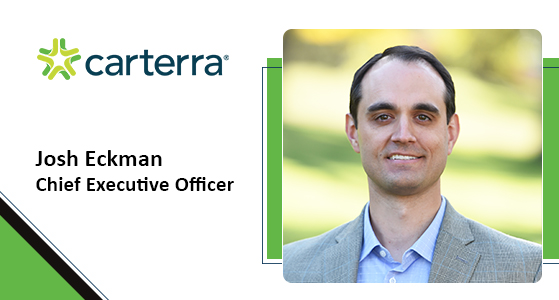
In conversation with Josh Eckman, CEO of Carterra, Inc
When Carterra was founded, drug discovery was already a complex space. What stood out to you at that time as something that wasn’t being solved well enough?
What stood out wasn’t the lack of technology, it was the limitation in how that technology could scale. Surface plasmon resonance (SPR) was already well established as a high-quality method for studying molecular interactions, but it was too slow to be used for primary screening workflows.
In most labs, SPR was pushed into later stages because the throughput was limited and sample requirements were relatively high. As a result, screening relied on faster but lower resolution methods, and detailed understanding came later.
“You were forced into a trade-off. Speed early, precision later. That’s how the workflows evolved.”
From my perspective, that limitation wasn’t unchangeable. It was something that could be engineered around.
How did that thinking shape the direction you took as CEO in the early days?
Our focus was very deliberate, we didn’t try to solve everything. We stayed close to one problem: bringing high-resolution interaction data into the earliest stages of discovery.
My background in microfluidics influenced that approach. We saw an opportunity to rethink SPR by combining it with high-throughput microfluidic systems. That’s what led to the development of our HT-SPR platform.
The result was up to a 100-fold jump in throughput without compromising data quality.
“For me, it was about making early data just as reliable as what you’d see from detailed characterization at the end of the process.”
Once that happens, the entire timeline of decision-making can be shifted.

What changes inside a lab when that limitation is removed?
The biggest change is how workflows come together.
With platforms like the LSA®, LSAXT, and Ultra®, researchers no longer must separate screening from detailed characterization. They can do both within a single system. That means affinity analysis, epitope binning, peptide mapping, and quantitation can all happen in one place.
From a leadership standpoint, that’s important because it reduces fragmentation.
“You’re not piecing together answers from different systems anymore, you’re seeing the data come together in one workflow.”
It’s not just about efficiency, it’s about giving teams confidence earlier in the process.
The launch of Vega seems like a major step. How do you see it fitting into that broader vision?
Vega is an extension of that same idea.
It’s a 48-channel HT-SPR platform, which allows for more than 20,000 small molecule interactions to be screened per day. This makes high-resolution real-time binding available during primary screening.
Traditionally, you would only get that kind of detail later on in the process.
“What Vega does is move insights forward. You can make informed decisions at a point where that wasn’t previously possible.”
From a strategy perspective, that’s where we see the biggest impact—changing when decisions can be made, not just speeding up workflows.
What kind of feedback do you hear from customers once they adopt these systems?
What I hear most often is that workflows start to feel different.
Teams aren’t just saving time, they’re restructuring how they approach discovery. Instead of running multiple assays across different platforms, they can consolidate that work into a single run.
That has a practical effect. They can handle larger libraries, work on more complex targets, and still maintain efficiency.
“It gives teams room to explore more without adding operational burden.”
That’s a key indicator that the technology is doing what it was designed to do.
With that level of throughput, data management becomes critical. How have you approached that?
That’s been an important part of the platform from the beginning. Generating data at scale is only useful if you can interpret it quickly.
We developed software that allows researchers to visualize and analyze interaction data directly within the system. Things like on-rates, off-rates, and affinity can be mapped in ways that make comparison straightforward.
“At this scale, clarity is what matters. Otherwise, you’re just creating more complexity.”
With Vega, that same approach applies at the primary screening stage, which is particularly important for teams working with AI-driven discovery models.
From a leadership perspective, how do you balance pushing the science forward with scaling the business?
It comes down to discipline.
As CEO, my role is to keep the company focused on solving clearly defined problems while building the infrastructure to support growth. We’ve seen strong revenue growth, but that growth has been tied closely to advancing our technologies and platforms.
At the same time, we’ve built a leadership structure and board with experience in scaling life sciences and analytical instrumentation companies. They bring a level of operational perspective that has helped to accelerate our growth.
“Innovation must translate into something that works in the real world. That’s where balance comes in.”
How do real-world lab pressures influence the way you think about product design?
Discovery labs operate under constant time pressure. Teams are managing multiple programs and any added complexity slows them down. We design systems that reduce friction, increase automation, enable walk-away workflows, and minimize manual intervention.
Vega, for example, includes optional robotic integration that allows for multi-day, unattended operation.
“The goal is to let scientists focus on interpreting results, not managing the process.”
That’s something we keep coming back to in every product decision.
Did the pandemic change how you see Carterra’s role in the industry?
It reinforced it.
Our HT-SPR technology was part of the discovery work that led to bamlanivimab, one of the first COVID-19 therapeutics to reach clinical trials. The discovery timeline of 90 days showed what’s possible when you have access to high-quality data in early discovery.
“It highlighted how much early-stage clarity can compress development timelines.”
That’s something we’ve always believed, but the pandemic made it very visible.
Looking ahead, how do you see Carterra’s impact evolving?
I see it as continuing to shift when and how decisions are made in drug discovery.
By removing the trade-off between speed and resolution, we’re helping teams make earlier decisions with more confidence. That reduces downstream risk and keeps programs moving.
“When you bring clarity forward, the entire process becomes more efficient.”
That’s the real impact – not just improving workflows but changing how discovery itself is accomplished.

Company Name : Carterra
Website : https://www.carterra-bio.com/
Management Team
Josh Eckman | Chief Executive Officer